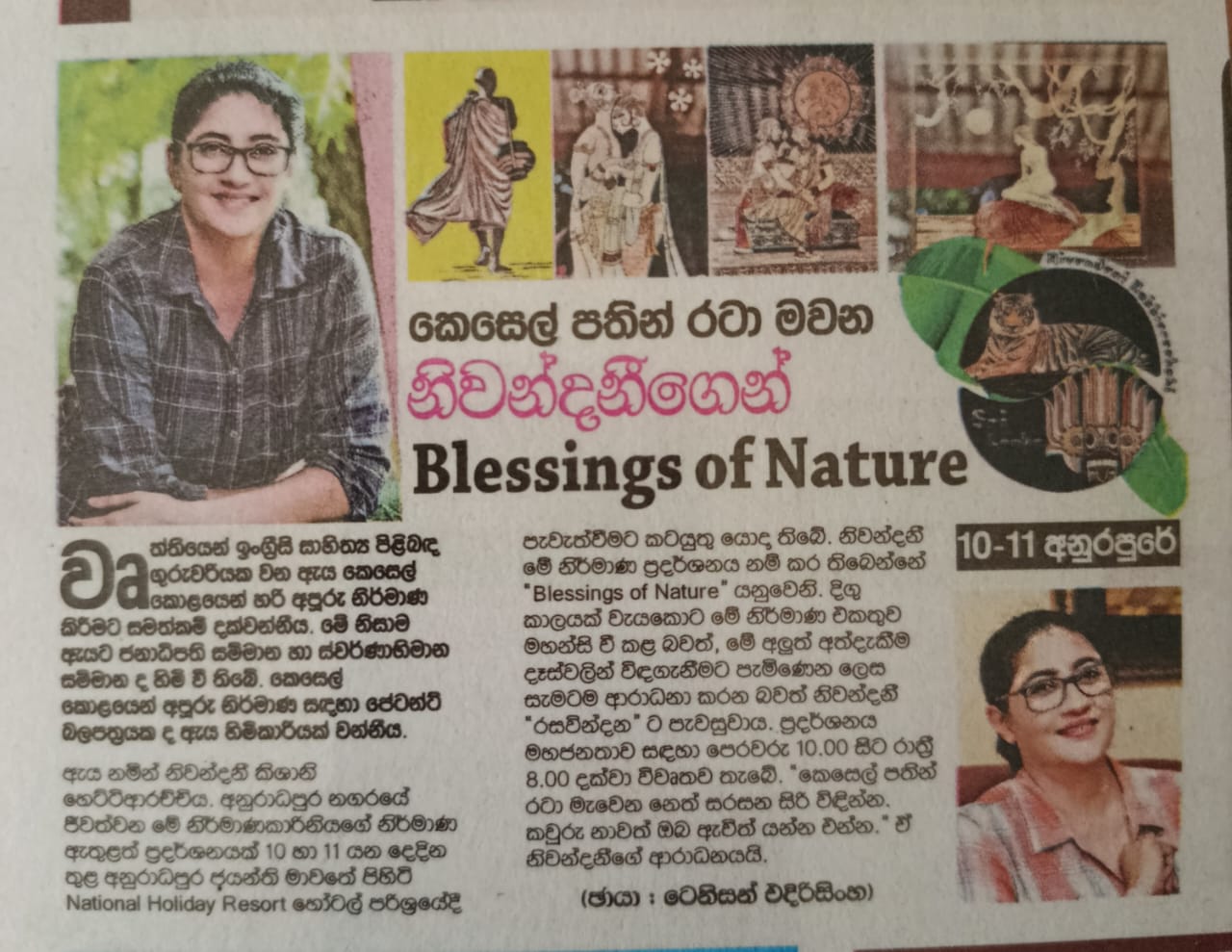
Transforming Nature into Masterpieces
In the quiet village of Sumudugama, Talawa, Anuradhapura, lives a truly unique artist—Nivandani Hettiarachchi, a creator who transforms dried banana leaves into breathtaking works of art. What others might throw away, Nivandani sees as vibrant, living material with limitless creative potential.
From a Teacher to a Trailblazer in Sustainable Art
Professionally, Nivandani is an English teacher. But behind that title lies an extraordinary talent that began in her school days in 1989. By 1990, she had already gained national recognition at a mobile presidential arts competition, winning a prestigious award representing Swarnapali Girls’ College.
With the freedom her teaching job provided, she continued her passion, eventually leading to a signature style: using dried banana leaves to create wall hangings, cards, and custom artwork—all without a drop of artificial color.
Time, Precision, and Global Appreciation
Each piece requires immense patience. One of her award-winning creations took three months to complete. Today, Nivandani’s work is in high demand—especially internationally. She uses online platforms to receive orders and ships her pieces globally via courier services. Locally, word of mouth plays a key role in sharing her art, with visitors often purchasing or custom-ordering pieces after seeing her creations firsthand.
Recognition and Awards
Nivandani’s banana-leaf art has received numerous accolades, including:
-
Two Presidential Awards (2006 and 2012)
-
Swarnabhimani Award (2008)
-
Patent Rights (acquired in 2006)
-
16 Special Skills Awards at regional competitions
She has also been actively involved in training unemployed youth and women through workshops under government programs, introducing banana-leaf artistry as a sustainable creative skill.
Challenges Faced by Local Artists
Despite her success, Nivandani highlights the lack of government support for artists like her. Though officials encourage her to scale up—suggesting she open a shop and tap into the market—she continues to run her art business from home due to limited resources.
She emphasizes the need for:
-
A centralized hub or gallery for handmade Sri Lankan art
-
Better state support for selling and promoting local crafts
-
Guidance and infrastructure for traditional artists to expand commercially
A Vision for the Future
As Sri Lanka works to grow its tourism industry, Nivandani believes that artisans like herself can play a powerful role in promoting culture and sustainability. All that’s needed is recognition—and a little help from those in power.